This post is also available in: Français

Welcome to Genealogy Quebec!
Whether you’re taking your first steps in genealogy or you’re an experienced researcher discovering our platform, this guide is for you.
If you’re new to genealogy, click here.
If you have genealogy experience but are new to Genealogy Quebec, click here.
The Basics of Genealogy
Genealogy is the science dedicated to researching family lineages. But more specifically, what does this research involve?
It all depends on your goal. In fact, there are several types of genealogy, and the scope of your research will depend on the type of ancestry you wish to build.
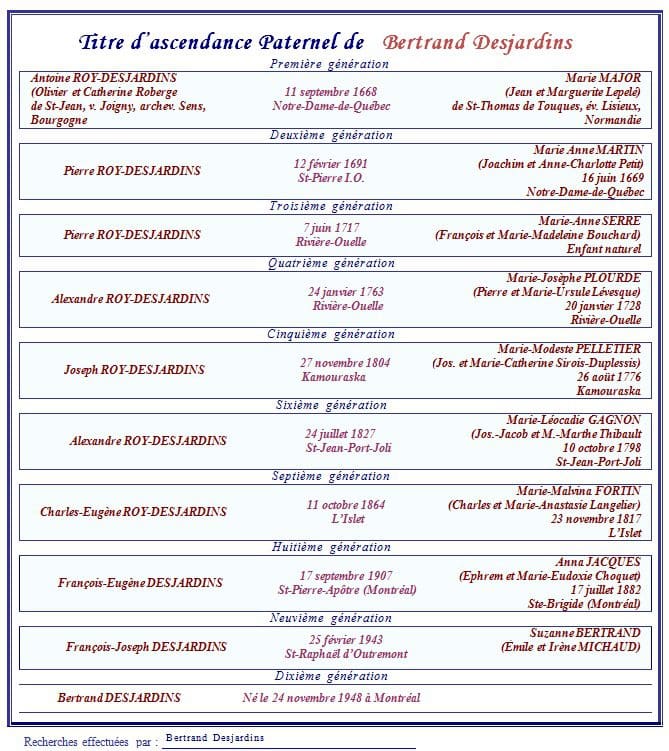
Linear ancestry
All the direct-line ancestors of the individual of your choice (generally your father) — their parents, then paternal grandparents, and so on.
This is the simplest and quickest type of ancestry to complete, and it connects you directly to the most distant direct ancestor bearing your family name.
Complete Ancestry

All the ancestors from whom you descend. This type of ancestry includes every known ancestor in your lineage, with the number doubling each generation: two parents, four grandparents, eight great-grandparents, and so on.
Your Genealogical Research in 3 Steps
Whether you’re working on linear or complete ancestry, the key to your research is the marriage record.
Indeed, officiants were generally required to record the names of the spouses’ parents. By finding the marriage records for these individuals, you can trace back to the previous generation, and then repeat the process to go back through the generations.
Step One – Gather Information
To trace your ancestors, the first step is to establish the information you already know — such as names, dates, and places — by speaking with relatives if necessary.

It is strongly recommended to record as much information as possible so you can refer to it during your research.
Step Two – Use This Information to Find a Marriage in the Lineage
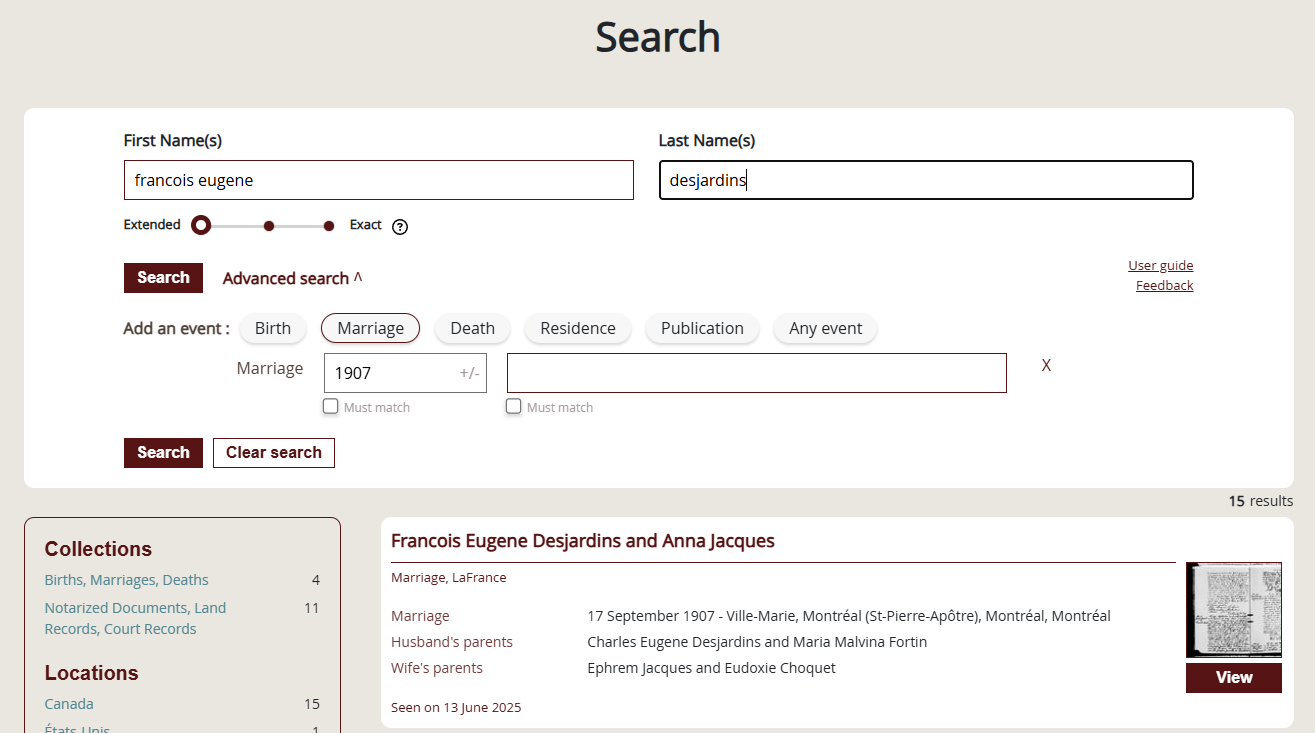
It’s now time to use the information gathered in the first step to locate a marriage record in the lineage, which will serve as your starting point.
Step Three – Trace Back Generation by Generation
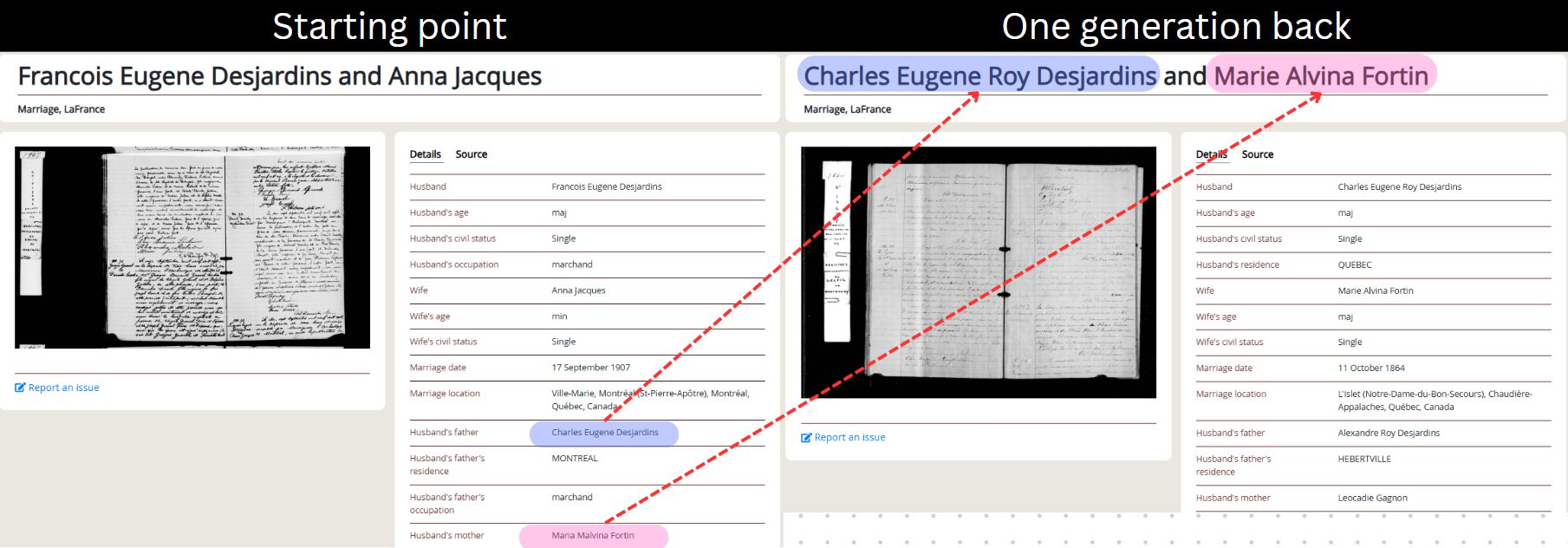
With a marriage record in hand, you are now in a position to trace the ancestors in your lineage. You can go back one generation by finding the marriage of the groom’s or bride’s parents, whose names are listed in your starting marriage record.
To do this, simply search for the names of the groom’s or bride’s parents, as applicable.
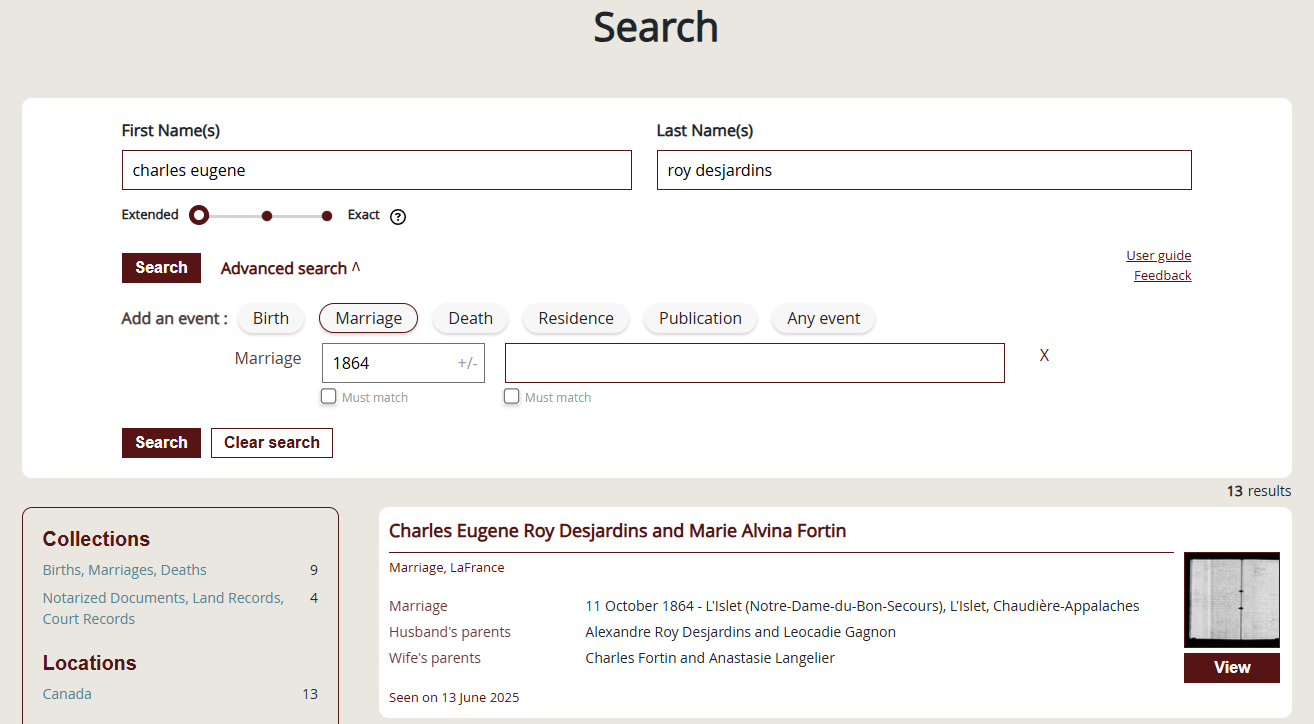
This process is repeated until you reach the first generation of your lineage to set foot in Quebec, often in the 18th or even 17th century. Depending on the family, you may have to go back more than ten generations before reaching the first immigrant.
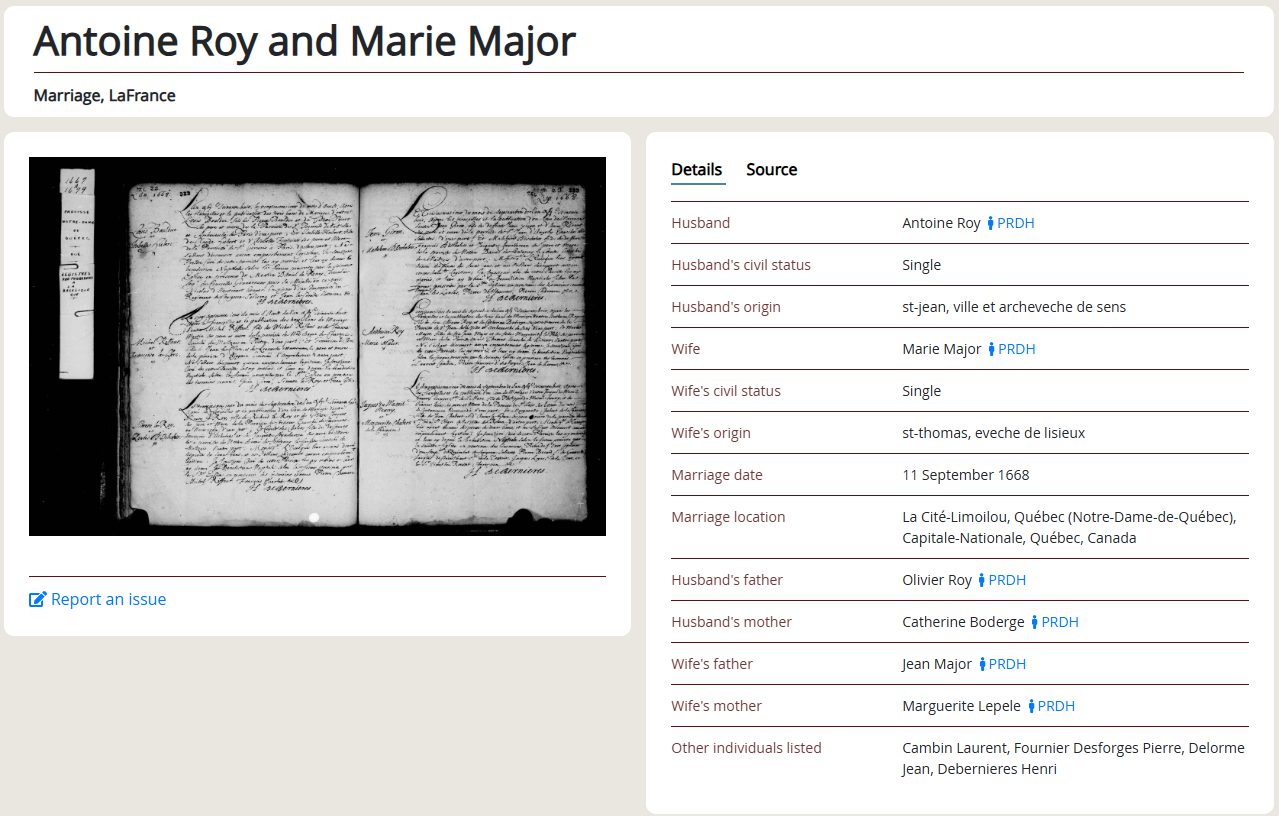
Additional Documents – The Little History of Your Ancestors
Tracing the individuals in your lineage is the foundation of genealogy. But once these people are identified, is your research over? Once again, it all depends on your goals.
Some researchers set out to find the children of the couples they’ve traced or to supplement the lineage(s) with birth and death dates and locations for each individual. These additional searches are generally done using birth and death records.
However, Genealogy Quebec also offers a wide variety of documents that can add color and depth to your family tree.
On the search engine, you will find the following types of documents:
- Obituaries and memorial cards: May contain additional information about the deceased and their family.
- Headstones: Provide a place of memory and reflection for your ancestors.
- Censuses: Offer a variety of information about the family unit.
- Notarial contracts: Give fascinating insight into various aspects of our ancestors’ daily lives.
- Postcards: Offer a unique glimpse into the everyday life of our ancestors.
- Other miscellaneous documents
You now have all the tools you need to start your genealogical research!
Want to go further? Check out our genealogy guide, which explores each step of the process in detail and supports you throughout your discoveries:
- Lesson 1 – Introduction to Quebec Genealogy
- Lesson 2 – Starting Your Genealogy Journey
- Lesson 3 – Parish registers: a goldmine of information about your ancestors
Researching on Genealogy Quebec
Whether you want to find a particular record, follow an ancestor’s life or trace an entire family line, the Genealogy Quebec search engine is your starting point. It lets you explore the site’s indexed documents using the information you already know.
Two modes are available: Basic Search, ideal for starting with a name and a few clues, and Advanced Search, which lets you combine people, events and collections to refine your search.
Basic Search
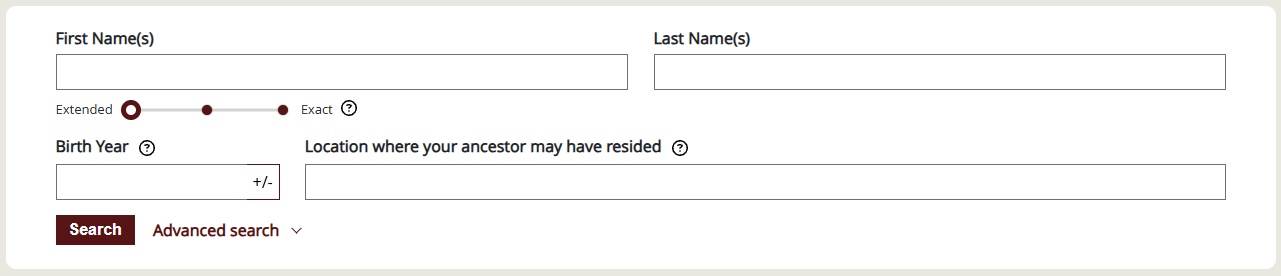
Basic Search works on a simple principle: you search for a person, and the engine suggests documents in which they are mentioned. They may be the main subject, a parent, a spouse or simply someone named in the index. The most relevant results appear first.
Names and search broadness
Enter the first and last names of the person you are looking for. Accents, capital letters and hyphens may be included or left out without affecting the results.
Unsure how a name was spelled? The broadness setting lets you choose an exact or extended search, with the latter allowing more variation. This is particularly useful when an ancestor’s name was written in different ways over time. Read more about search broadness for details.
Birth year and location
If you know it, add your ancestor’s exact or approximate birth year. The engine uses it to look for records consistent with their lifetime. Be careful not to enter a marriage or death year in this field. You can widen or narrow the year range using +/−.
The location can be a town, parish, region or even a country. It helps prioritize documents associated with that place without automatically excluding other locations. If you do not know the birth year or location, simply leave those fields blank and start with the name.
Advanced Search
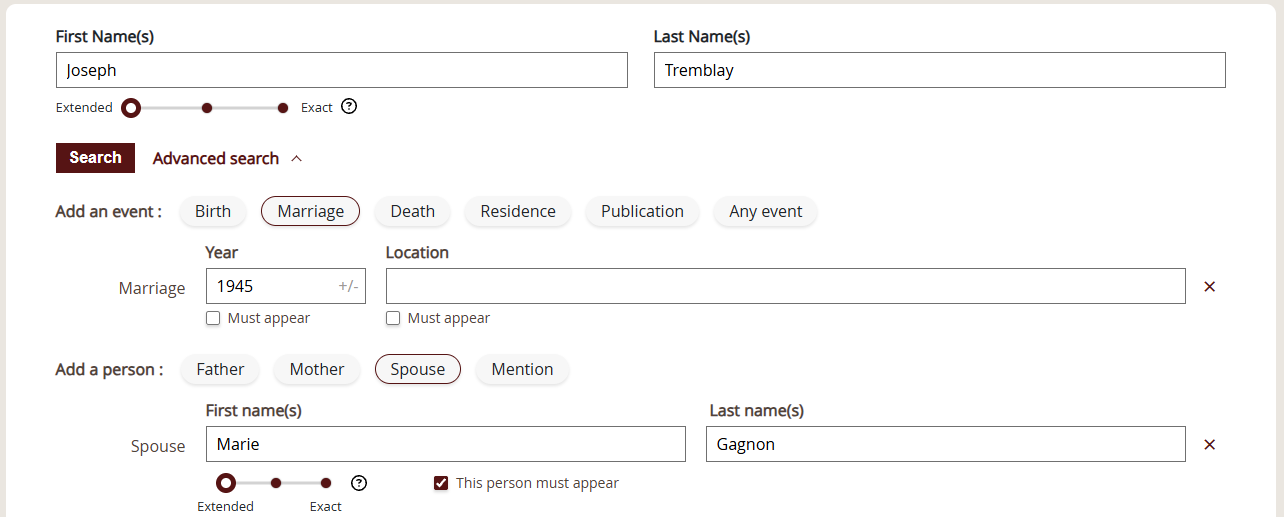
Do you know a parent’s name, a spouse’s name or the date of an event? Click Advanced Search to put that information to use. The person entered in the main first and last name fields is the subject you are researching: for example, the deceased in a burial record or one of the spouses in a marriage record.
Add people to your search
Add the person’s father, mother or spouse to help the engine identify relevant records.
You can also search for a father, a mother or both parents without entering a main person. To find records in which a couple is mentioned as parents, for example, enter their names in the Father and Mother fields and leave the main first and last name fields blank.
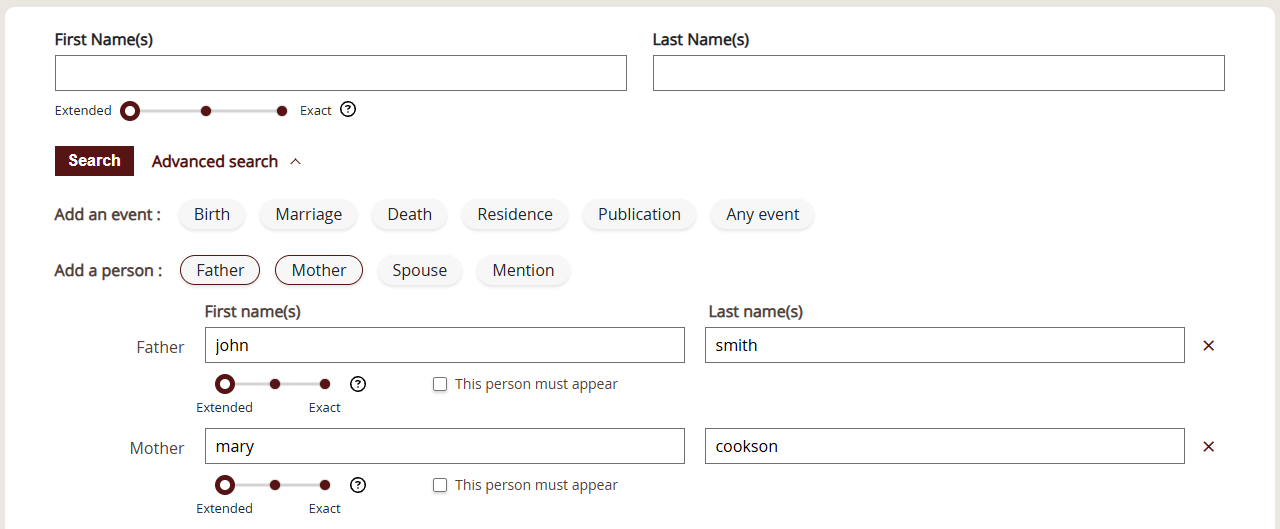
The Mention option lets you add a person to the search regardless of their role in the document.
Add events to your search
You can specify a year and/or location for a birth, marriage, death, residence or publication. To search for a year or location without specifying the event it relates to, choose Any Event.
For example, to look for the marriage of Joseph Tremblay and Marie Gagnon around 1945, enter Joseph as the main person, add Marie as his spouse, then add a Marriage event with the year 1945 and an appropriate year range.
Require a person or detail to appear
Added people and events help refine your search, but they do not all have to appear in every result. To require a person, year or location to be explicitly mentioned, select the corresponding Must appear checkbox.
For example, requiring Marie Gagnon as a spouse keeps only records that mention her in that role. With Mention, she must appear in the document, but her role does not matter.
Refine your results with filters
After running your search, you can narrow the list further using the document type or collection, location and date filters. For example, a location filter can help you isolate records from one parish when several people share the same name.
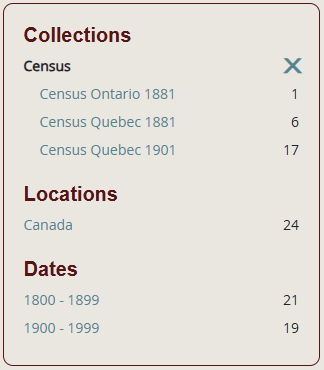
These filters apply to results you have already obtained: documents that do not match are removed from the list. Remove a filter to broaden your results again.
For all available options and practical tips, see the Search Engine User Guide.
Other Tools and Collections
Finally, Genealogy Quebec offers directories of parish registers and various documents, accessible through structured folder trees:
- Drouin Collection Records: All parish registers from Quebec and French Acadia, as well as some from Ontario and the Northeastern United States, dating from 1621 to the 1940s.
- Drouin Miscellaneous Collections: An assortment of archival fonds, images, documents, books, photos, and directories of historical and genealogical interest.
- City Directories: Various city directories and phone books from across Quebec and Ontario, often dating back to the 19th century.
Although these sources are less accessible than the collections integrated into the search engine, they remain extremely valuable and can greatly assist your research.
Need a helping hand?
Struggling to decipher a record or decide where to take your research next? Expert Help offers personalized guidance, with one question included each month in your paid subscription.
For questions about using the website or managing your account, email us at contact@institutdrouin.com.
Happy researching!

