
Enjoy 33% off during the Holidays — annual subscription for $108 CAD

Last names in Quebec: the influence of the pioneers

In a previous article, we learned that the ethnic French Canadian population is descended from a surprisingly small amount of immigrants.

The influence of this small number of immigrants can still be seen in the frequency and variation of last names in Quebec to this day.

For example, here is the list of pioneers that have the most married descendants before 1800 (this list was compiled using the PRDH database):

Name of the pioneerAmount of descendants

married before 1800

Zacharie Cloutier10 850
Jean Guyon9 674
Marin Boucher8 502
Jacques Archambault8 445
Noël Langlois7 847
Abraham Martin7 765
Pierre Miville6 552
Pierre Desportes6 515
Jean Roussin4 730
Louis Hébert4 592

This list does not contain some of the most common names used today, and also includes some names that are rarely seen nowadays. This is because while some of these ancestors had a lot of descendants, most of these descendants were female. Thus, their last names were not transmitted through the generations. We have compiled a second list limited to patronymic descendants of these pioneers, which in other words refers to descendants through the male side:

Name of the pioneerNumber of

“patronymic” descendants

married before 1800

Jean Côté567
Pierre Tremblay564
Marin Boucher482
Jean Dumais481
Louis Houde471
Jean Guyon449
Jacques Archambault423
Pierre Parent418
Zacharie Cloutier391
Guillaume Pelletier389

Let’s now compare this list with the most common last names used in Quebec in 2006:

RankLast namePercentage
1Tremblay1,076
2Gagnon0,790
3Roy0,753
4Côté0,692
5Bouchard0,530
6Gauthier0,522
7Morin0,498
8Lavoie0,459
9Fortin0,449
10Gagné0,448
11Ouellet0,447
12Pelletier0,435
13Bélanger0,429
14Lévesque0,412
15Bergeron0,399
16Leblanc0,367
17Paquette0,361
18Girard0,356
19Simard0,354
20Boucher0,341
21Caron0,321
22Beaulieu0,300
23Cloutier0,297
24Dubé0,296
25Poirier0,295

(Source: http://www.stat.gouv.qc.ca/statistiques/population-demographie/caracteristiques/noms_famille_1000.htm)

We find half of our previous list among the top 25 most common names in Quebec today. The impact of these few pioneers is undeniable, even to this day!

And your pioneer ancestor?

The PRDH offers a free tool that lists all the pioneers for a given last name. If you have a French Canadian name, you can enter it here and obtain a list of pioneers for that name, assuming they arrived in Quebec before 1766.

How to determine which pioneer is your ancestor

Oftentimes, a last name can be linked to several pioneers. For example, two Desjardins living in Quebec today will not necessarily share the same pioneer ancestor; one may descend from Antoine Roy dit Desjardins, who arrived in Quebec in the 1660s, and the other from Pierre Desjardins, who only arrives in Quebec in the 18th century.

The only way to determine which pioneer is your direct ancestor is to do your ascending genealogy, starting with your parents all the way back to your first ancestor on Quebec soil.

Genealogical research websites such as Genealogy Quebec and the PRDH are great tools to go up your family tree and ultimately find out the history behind your name.

All The 1917 Quebec Catholic Marriages Are Now Available on Genealogy Quebec!

Today, we are happy to announce the addition of all 1917 Quebec Catholic marriages to Genealogy Quebec. These marriages are now available on the LAFRANCE.

LAFRANCE update figures

Catholic Marriages 1917: 15 369 records added
Catholic baptisms 1850-1861 : 17 397 records added
Catholic burials 1850-1861 : 6 576 records added

In addition, the corrections sent by our users over the past 2 months have been applied.

About the LAFRANCE

The LAFRANCE, one of 16 tools available to GenealogyQuebec.com subscribers, is a detailed index with link to the original document of ALL Catholic marriages celebrated in Quebec between 1621 and 1917, ALL Catholic baptisms and burials celebrated in Quebec between 1621 and 1849 as well as ALL Protestant marriages celebrated in Quebec between 1760 and 1849. Baptisms and burials of the 1850-1861 period are added gradually through our bimonthly updates.

Original document for the 1917 marriages

While the certificates for the 1917 marriages are now available on the LAFRANCE, they are not yet linked to the original parish document. These links will be added with the release of our first spring update.
Until then, the original documents can be viewed in the Drouin Collection Records. Here is an example illustrating the process of finding the original document for a 1917 marriage.

We are looking for the original document associated with the marriage certificate of Joseph Desjardins and Marie Eva Levesque.


To find the original document, we will use the Drouin Collection Records tool. Once there, we will open the Québec folder.


We must then find the folder named after the parish in which the marriage was celebrated. In our case, the parish is St-Pacôme and will be found under “St”.


By opening the 1917 folder, we obtain the list of images of St-Pacôme’s register for that year. The images are sorted in chronological order; the first images will contain the January records, while the last few images will contain the December records. Since the marriage we are looking for was celebrated on January 30th, we know that it will be found on one of the first images.


And with that, we have found the original document pertaining to Joseph Desjardins and Marie Eva Levesque’s marriage.

New articles on the Drouin Institute blog

Immigration from Old to New France, the first of a series of articles about the first French settlers.

Genealogically yours,

The Drouin team

Immigration from Old to New France

France under the Old Régime did not supply a great number of emigrants to its colonies across the Atlantic.

In fact, just 15 000 Frenchmen and Frenchwomen sailed for Canada in the seventeenth century, and two-thirds of them stayed in the colony for a short period and either returned to France or died in Canada without getting married. This was a very low number: the British Isles, with a population just over one-third of France’s, sent almost 380,000 immigrants to the New World over the same period.

In fact, France was at the time showing various symptoms of social discontent that should have justified a larger number of refugees fleeing to Canada, whose abundance of resources contrasted with the famine and unemployment among the poorest classes. Although France wasn’t really overpopulated, conditions there were favorable to emigration; these conditions, had they coincided with a real attraction of Canada, would have encouraged the departure of large contingents of settlers for the New World.

But few French people migrated, as Canada, a distant, wild, and dangerous country, had a poor reputation. On top of this, the authorities believed that the French population was not growing as quickly as it should be – and, in fact, that it was shrinking due to wars, plagues, and general misery.

In response to Intendant Talon, who had asked him to find the means to form a “grand and powerful state” in Canada, which would involve a massive wave of immigrants, Colbert said, in a sentence that was to mark the future of the country: “It would not be prudent [of the king] to depopulate his kingdom as he would have to do to populate Canada.”

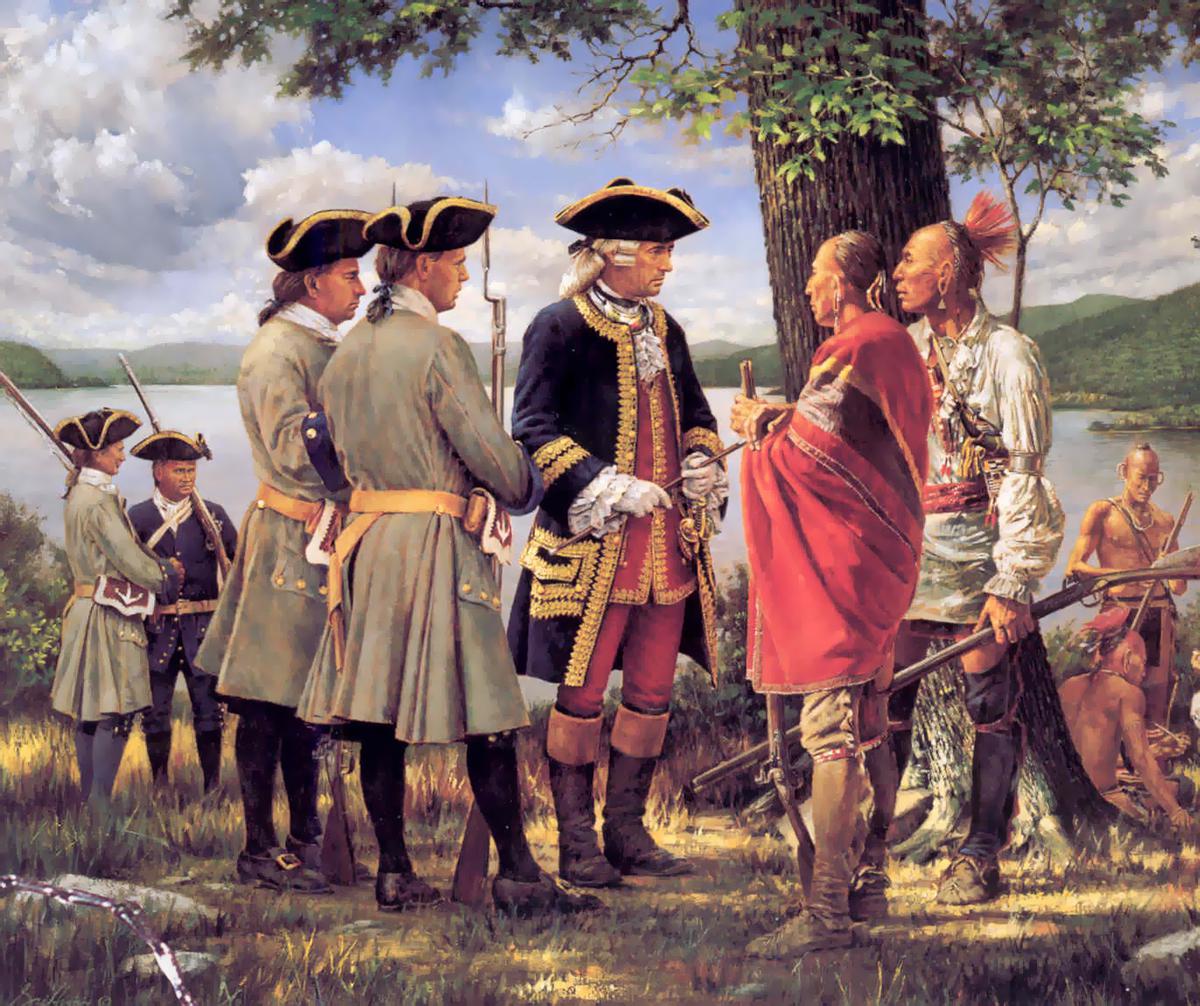
And yet, even had departures been multiplied tenfold, the effects of emigration on the most populous country in Europe would have been imperceptible – and the fate of North America would probably have been quite different. Notwithstanding, reacting to the slow growth of the population, the King had women recruited between 1663 à 1673 to come to Canada. These women became known as «Les Filles du Roi» (the King’s daughters) and they can be found in virtually every family tree of French Canadians today.

In any case, the result of this small founding population was that the French-Canadian stock grew from a relatively small number of people, about 10,000 immigrants. If we consider the male immigrants, from whom family names were transmitted through the generations, the number is reduced to about 4,500 – the total number of immigrants who had at least one son who married.

These numbers were compiled from the PRDH database, which contains every single Catholic individual who lived in Quebec between 1621 and 1849. You will find more information on the PRDH in this article.

In our next article, we will explore the influence that this small number of immigrants had on the current French Canadian name diversity in Quebec.

Quebec obituaries

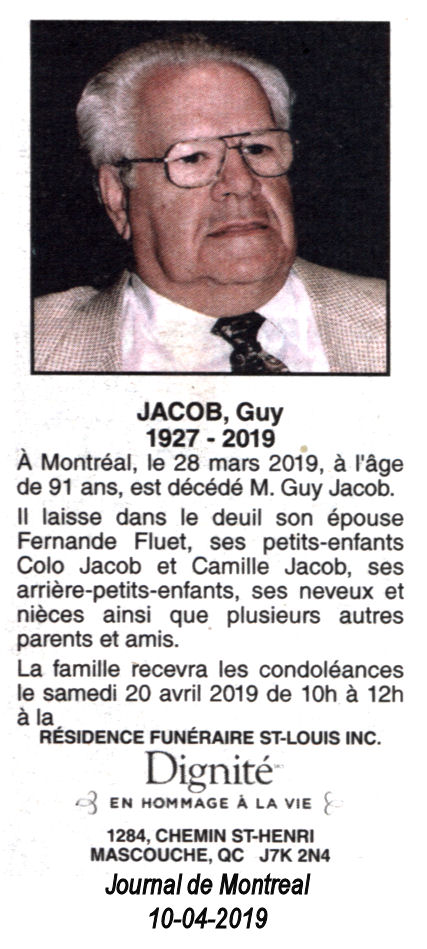
In Quebec, the practice of sharing the passing of an individual on a public platform started with the publication of obituaries in newspapers. In the 1960s, obituaries were not only shared in paper media but also on the radio.
Today, Quebec obituaries are still shared in the papers but are more easily accessed on the internet.

Finding Quebec obituaries on the internet

Numerous websites exist for the purpose of aggregating and sharing obituaries. These websites are indexed by search engines such as Google and Bing, which makes it extremely easy to find an obituary on the internet.

In most cases, a simple search for the deceased name in your favorite search engine will bring you to their obituary. It may be necessary to add “obituary” or “death notice” to the research for more common names. If the obituary is present on one or many of these aggregating websites, you will usually find it within the first few results of your research.

It is possible for an obituary to be available on a website without having been indexed by the search engines. If the notice you are looking for belongs to a recently deceased person, it may be a good idea to search for it on the aggregating websites directly, as search engines may take a few days to index it.

Note that these websites are usually limited to obituaries that have been published within the last few years. For obituaries from before 2000, you will have to look into specialized genealogy websites such as Genealogy Quebec.

Quebec obituaries collections on Genealogy Quebec

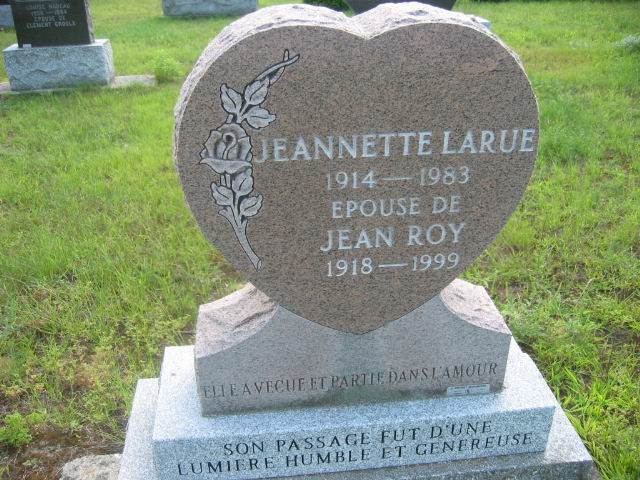
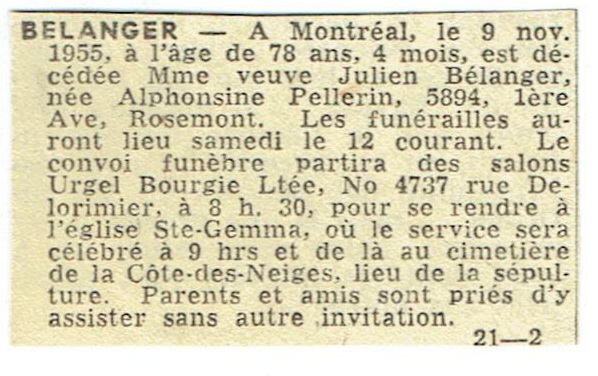
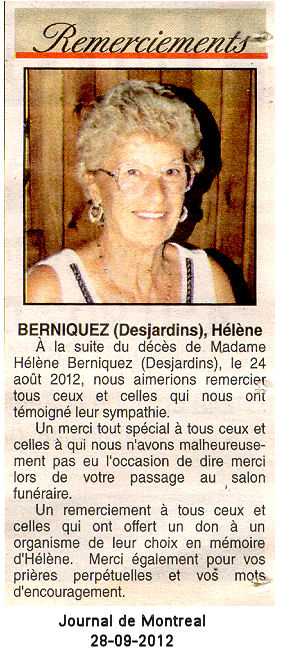
Obituary section – Tombstones, obituaries, memorial cards

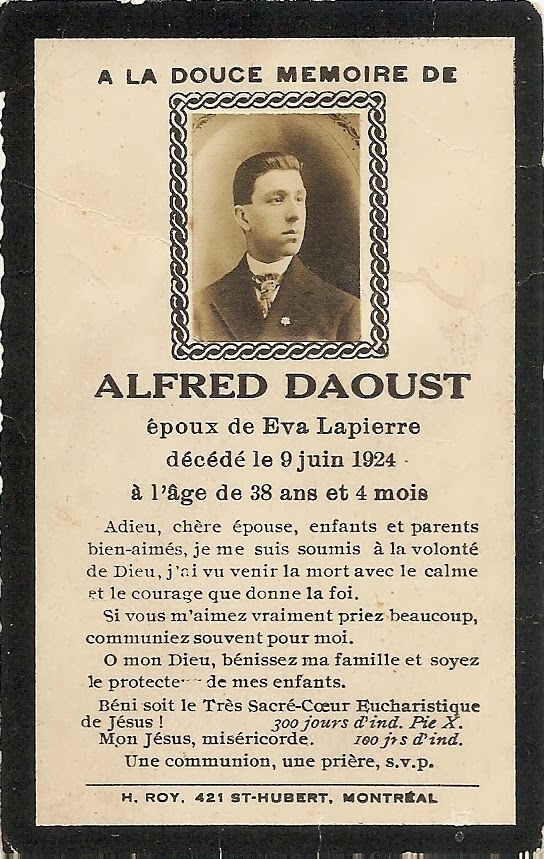
Genealogical research website GenealogyQuebec.com offers its members over 1,700,000 newspaper obituaries published in Quebec and Ontario between 1860 and today, 739,000 headstone pictures from cemeteries in Quebec and Ontario, as well as 100,000 memorial cards. You can try Genealogy Quebec FREE with a 7-day trial!

>>> Get the FREE trial <<<


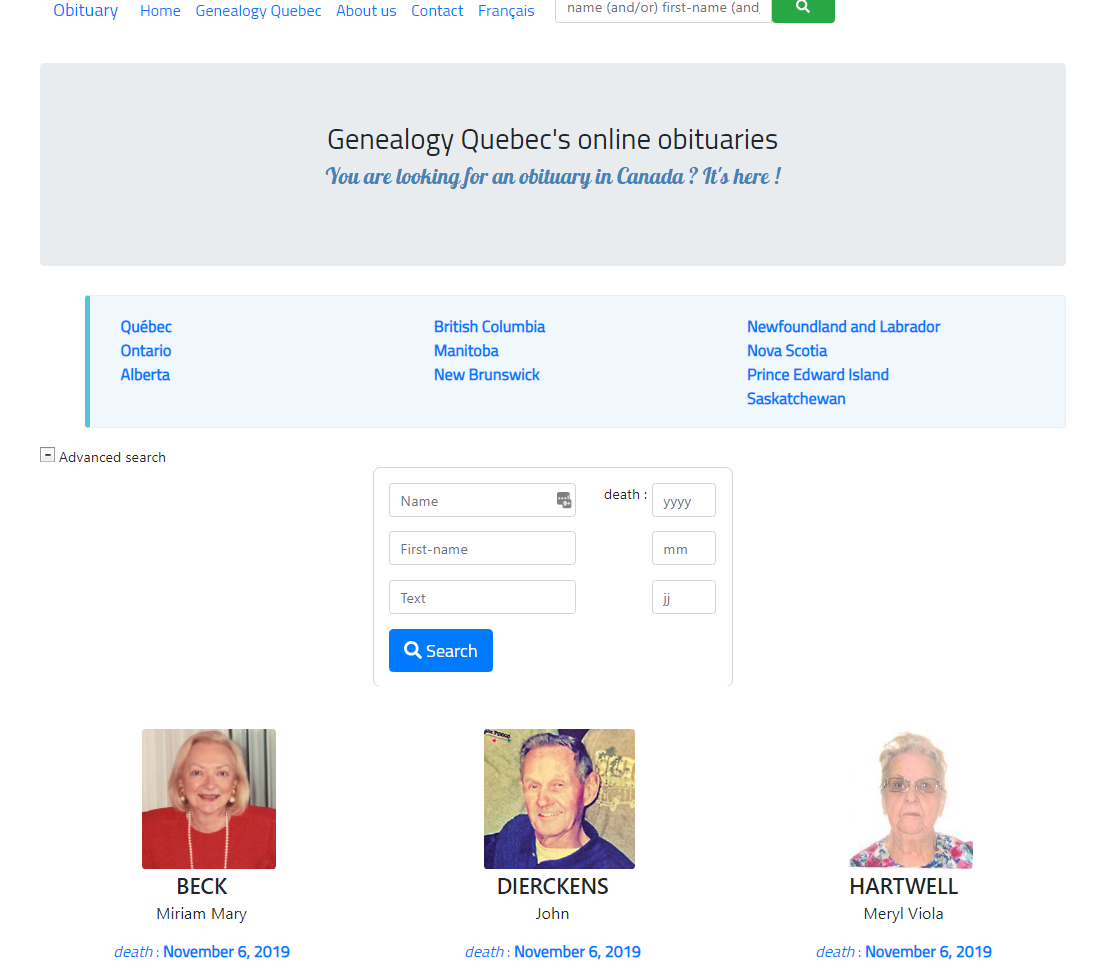
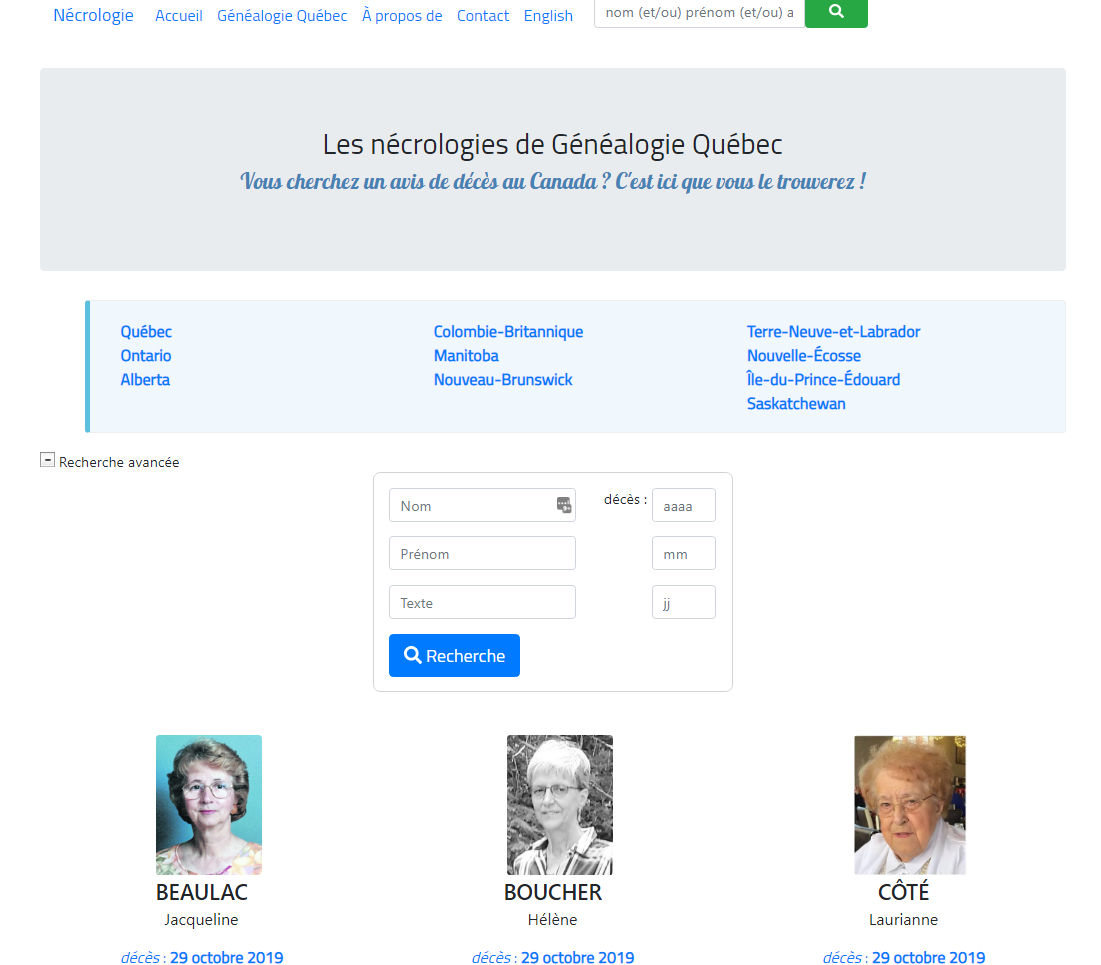
Online obituaries

GenealogyQuebec.com also offers its subscribers a collection containing more than 3,000,000 obituaries from everywhere in Canada. These obituaries are dated from 1999 to today.

You can search all of the website’s obituaries and death related documents using the search engine.

Discover The New City Directories Tool On Genealogy Quebec!

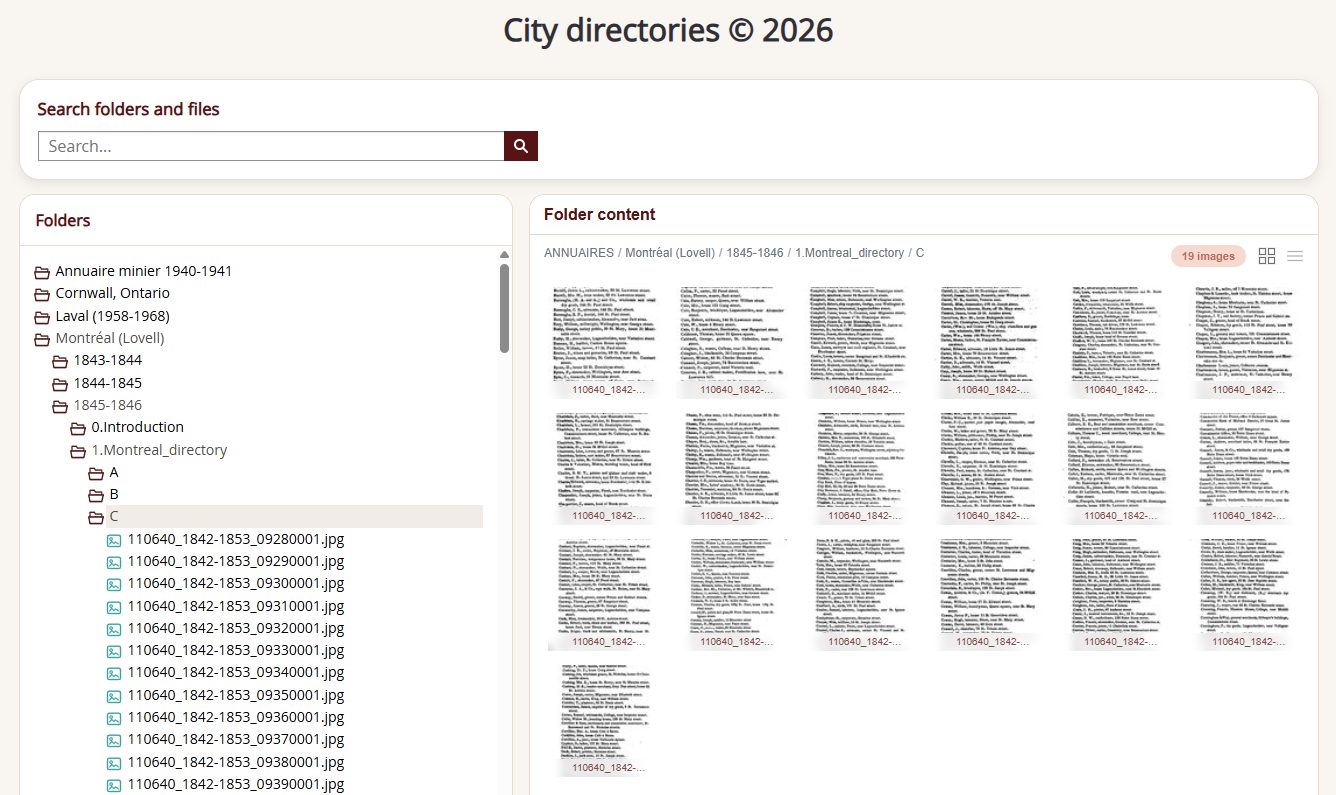
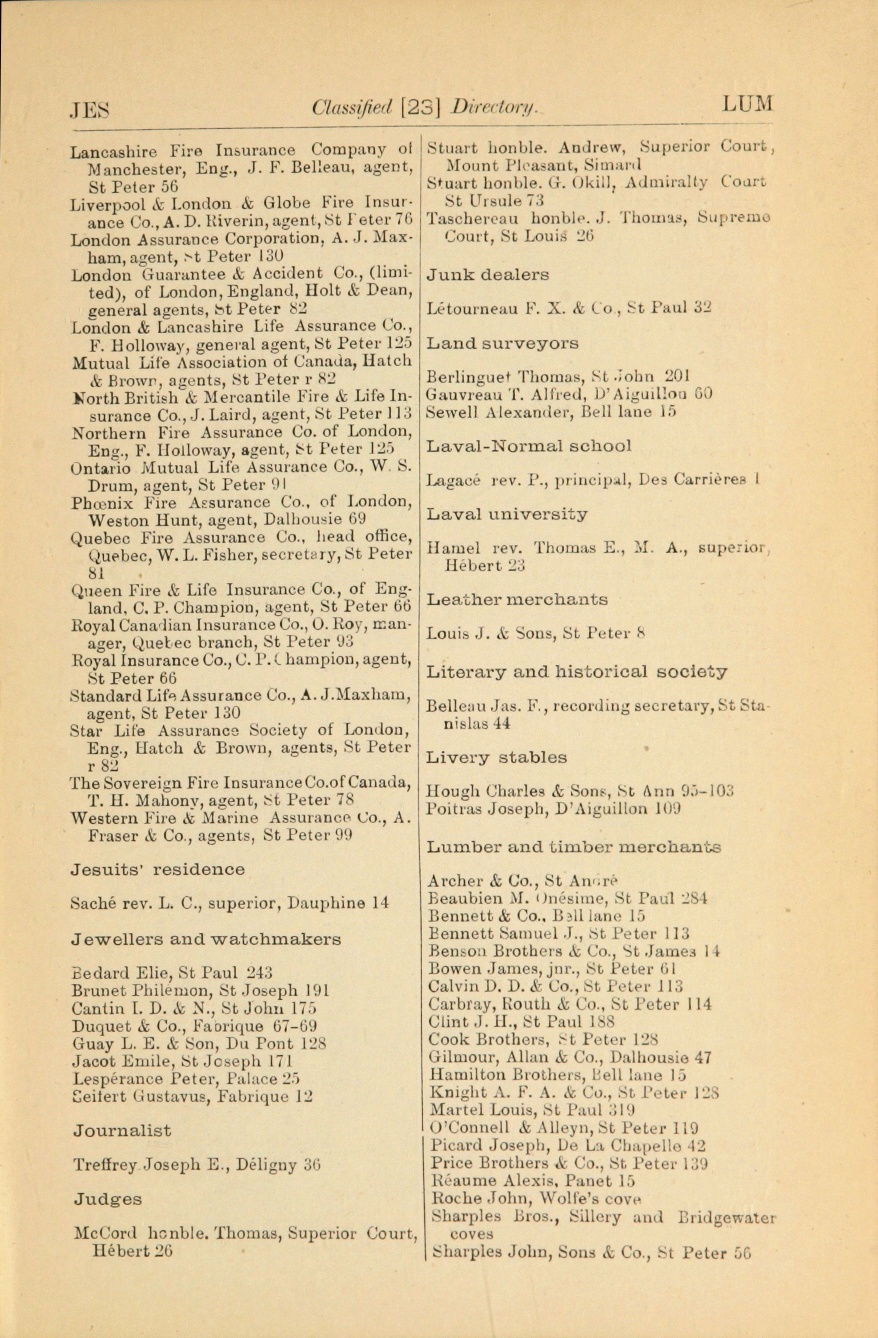
Today, we are introducing our City directories tool, a new database exclusively available to Genealogy Quebec subscribers!

This tool contains the Marcotte and Lovell telephone directories.
The Lovell covers the metropolitan region of Montreal from 1843 to 1912, while the Marcotte covers the city of Quebec and the surrounding areas from 1822 to 1904.
The period covered by the Lovell will be extended to the year 2000 in a future update.

This tool can be browsed with a subscription to Genealogy Quebec at this address.
For more information, visit our blog!

New articles on the Drouin Institute blog

Establishing your ancestry and finding your ancestors using Genealogy Quebec
This article, catering to genealogy novices and experts alike, details the various scenarios encountered while trying to establish your ancestry on GenealogyQuebec.com. A must read if you aren’t sure where to begin your research or if you are stuck on a brick wall!

Acadia – Families update

The Acadia – Families tool has been updated and now contains over 70 000 Acadian family files, covering from 1621 to 1849.
This tool contains family files based on original Acadian records. The files usually give the names of the parents, the name of the child, the parish and the dates of baptism and/or burial. In most cases, a link to the original marriage, baptism and/or burial record is available.
You can browse this tool with a subscription to Genealogy Quebec at this address.


Genealogically yours,

The Drouin team

City directories – Montreal (Lovell), Laval (Lovell) and Quebec (Marcotte)

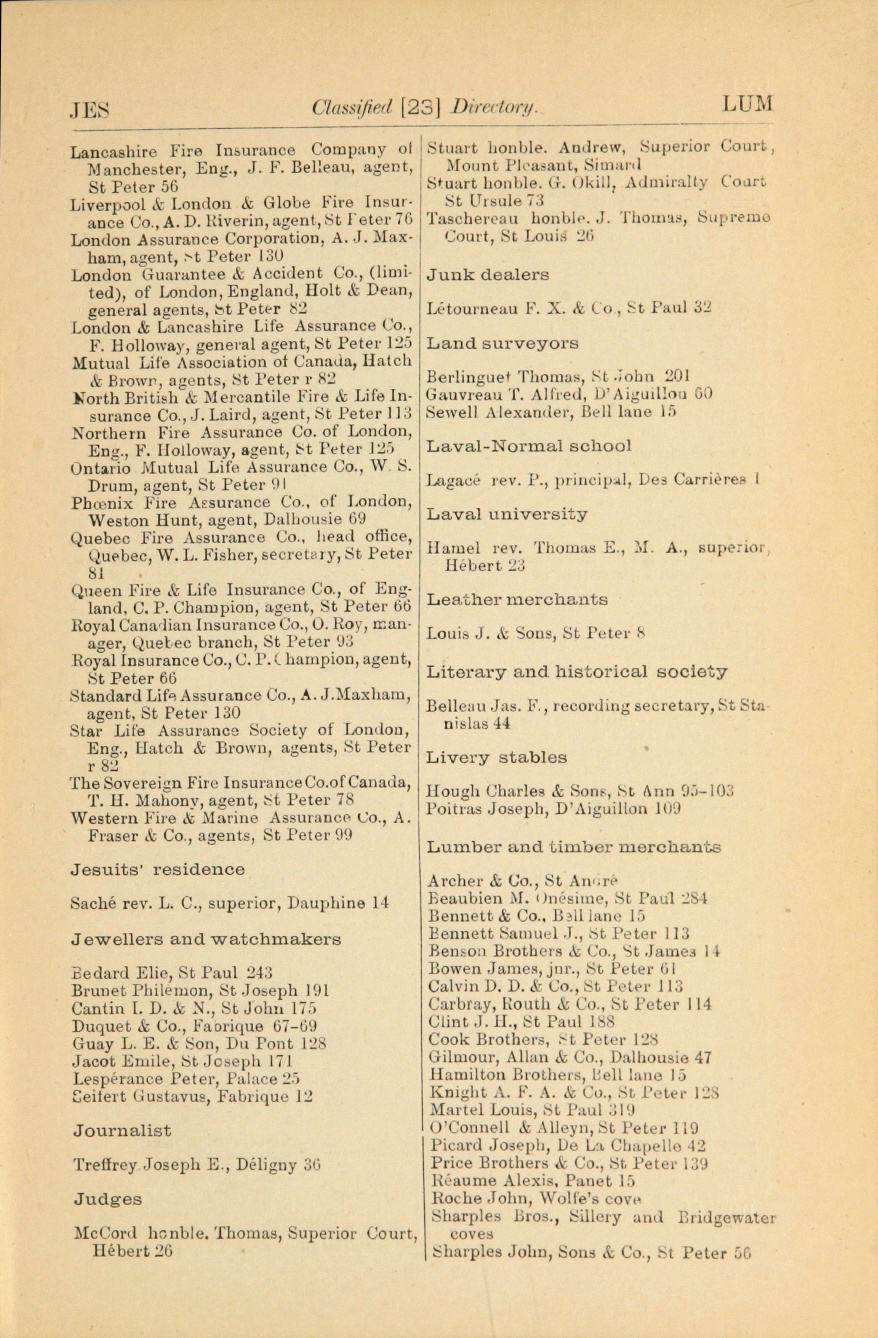
The City directories tool contains a digitized version of the city directories of Montreal (Lovell), Laval (Lovell) and Quebec (Marcotte). The directories have been digitized and indexed by year and category.


Within the directories, you will find the following categories:

    • Introduction – Contains the cover page, a preface, as well as a table of contents
    • Index to Streets, Avenues, Lanes – An index of the streets, avenues and lanes of the city
    • Index to Miscellaneous – An index of miscellaneous institutions(shops, religious and governmental buildings, schools, etc.)  by name
    • Index to Page Advertisers – An index of the advertisers who paid for a full page advertisement
    • List of Line Advertisers – An index of advertisers who paid for a small advertisement
    • Advertisers Business Classified Directory – Advertisers indexed by type of of services offered
    • Street Directory – An index of residents and businesses, sorted by street and address
    • Alphabetical Directory – An index of residents and businesses, sorted by name
    • Places in the neighborhood of Montreal outside city limits – A shorter, less detailed version of the city directory for neighborhoods of Montreal that weren’t inside city limits at the time
    • Miscellaneous directory – An index of traders and professionals organized by the types of services they offer

The Lovell covers the metropolitan region of Montreal from 1843 to 1978. The Marcotte covers the city of Quebec and the surrounding areas from 1822 to 1904, but note that a few years are missing. As for Laval, the years available are 1958 to 1963 as well as 1968.

You can browse the City directories tool with a subscription to GenealogyQuebec.com at this address.

Books on Family Genealogy in Québec : 3 Essentials to Discover

Genealogy is a subject that attracts a great deal of interest in Québec, especially because of the particular status of the culture and history of its population. This topic has therefore been the subject of many works, adopting several angles, including the founding families, the origins of family names, the creation of the cities and villages of the province, and the role of the church in the development of the province. So there’s something for all tastes and all needs regarding genealogical research. Here are 3 books on family genealogy in Québec to add to your reading list.

Les grandes familles du Québec, by Louis-Guy Lemieux (Septentrion)

This work brings together thirty chronicles published by the journalist Louis-Guy Lemieux in Le Soleil between 2003 and 2005. Lemieux is passionate about history and genealogy, which is reflected in the text. While preparing and publishing the book, the chronicles were expanded with some additional information to present very comprehensive content.

The text addresses the most common surnames in the regions of Québec, Chaudière-Appalaches, Côte-Nord, Bas-Saint-Laurent, Charlevoix, and Saguenay-Lac-Saint-Jean. Several aspects are studied, including the evolution of the names and the history of the families and their descendants. The book is also particularly interesting because it features photos of the families and places cited in the text, making the reading even more informative and enjoyable.

Retracez vos ancêtres, by Marcel Fournier (Éditions de l’Homme)

This is a book that’s intended as a guide to accompany people in their genealogical searches for their ancestors, more specifically in Québec, North America, and Europe. The book presents working methods, tools, and sources to consult to make the search successful. It also presents a great deal of information regarding relations between Québec and France, which are important factors in the evolution of the local population, the ancestors, and their descendants.

Votre nom et son histoire: les noms de famille au Québec, by Roland Jacob (Éditions de l’Homme)

The study of surnames very often turns out to be a key element in genealogical research. It also says a lot about the history of a family and/or a specific place. In Québec, family names are quite varied, as are their respective etymologies. Some are evolved forms of the names of ancestors, while others come from the names of the cities and villages of origin (most often located in France).

Roland Jacob’s book, published in 2015, is therefore a very interesting tool for better understanding the origin of names and the different possible interpretations that make it possible to trace their evolution. At over 430 pages, this work fascinatingly discusses the roots and alterations of over 10,000 names.

Some other works to discover about genealogy in Québec :

La Diaspora Québécoise, by Jacques Noël (Éditions GID)

Although they don’t want to admit it, many people hope to see a famous name appear in their family tree. Who wouldn’t like to boast about having Liza Minnelli, Madonna, or Camilla Parker Bowles as a cousin? This book describes the Québécois roots that have wound up in the upper echelons of society while addressing the origins and vocations of several Québec families in the first centuries following colonization.

Dictionnaire généalogique des familles du Québec: des origines à 1730, by René Jetté

(Morin et associés)

This is an extremely detailed book that identifies the 16,400 families who lived in Québec between the early days of colonization and 1730. The book totals over 1200 pages and is presented in the form of a dictionary.

Where to Find Books About Québec Genealogy

To find or consult these books, we recommend seeing if they’re available to check out from libraries or genealogical societies. In Montréal, many books about genealogy are available to borrow or consult on site at the Grande Bibliothèque. Of course, it’s also possible to order them at a bookstore or to buy them online. Finally, thousands of works related to genealogy are available at the Drouin Genealogical Institute’s online shop at this address.

Genealogy Outside of Québec : How to Find Your Québécois Ancestors

When leaving the borders of Québec, especially to visit New England, it’s not uncommon to find French-sounding family names. So you might imagine that this person’s ancestors left the Francophone province to settle elsewhere, keeping traces of these origins with them. Between 1840 and 1930, over a million Quebecers left the territory to look for work. Many of them settled in the northeastern United States, which explains the strong presence of Francophone roots in this region.Some families were separated during this time, so many Quebecers have ancestors who settled elsewhere and established their own family line there. To better understand genealogy and find these Quebeckers ancestors, here’s some crucial information to know how to track down ancestors who settled outside Québec:

Quebecers in the United States

According to certain studies, around 30 million Americans are descendants of Quebecers ancestors. The family ties are therefore numerous, and given that genealogy is a very popular activity in the United States, the resources for finding information are abundant.

How to Find a Québécois Ancestor in the United States

To carry out such research, it’s possible, among other options, to use resources from Québec and to collect information from genealogical societies located in the most relevant American regions. In the United States, several groups specialize in searching for French-Canadian ancestors.

For example, the American-Canadian Genealogical Society, based in Manchester, New Hampshire, is a centre dedicated to the genealogical research of Canadian and/or Francophone roots. Their collection brings together documents from – among other sources – the Drouin Collection, several Canadian Protestant churches, and archives from various American states.

The American-Canadian Genealogical Society is far from the only organization of this type. Several states, cities, and villages in the region offer this type of service, including the American-French Genealogical Society in Woonsocket, Rhode Island, and the French-Canadian Genealogical Society of Connecticut. It’s therefore possible to contact these organizations or to visit them in person.

The Drouin Collection

Over 25 million civil status documents make up the Drouin Collection. This collection consists of documents that come from Québec, as well as Ontario, Nova Scotia, New Brunswick, and the United States. Indeed, it’s possible to search baptismal records, marriage licences, death certificates, and other official documents, including some from the New England region. It’s therefore a very rich resource to complete research. In addition, the Drouin Collection is easy to access and relatively simple to peruse.

Books and Periodicals About Québécois Ancestors Living in the United States

Was one of the most famous American authors actually Québécois? Jean-Louis “Jack” Kerouac was born in Lowell, Massachusetts to Québécois parents. For that reason, Kerouac’s first language was Joual. Kerouac’s mother was also the first cousin of none other than René Lévesque. In addition to this amusing anecdote, books about emigration from Québec to the United States provide very useful information within the context of research, because they can give us hints and clues.

Here are a few interesting and relevant books and periodicals on this subject, which can be found in a library or digitized on the internet:

  • La ruée vers le sud: migrations du Canada vers les États-Unis, 1840 à 1930 (Bruno Ramirez)
  • Histoire d’un rêve brisé? Les Canadiens français aux États-Unis (Yves Roby)
  • L’émigration des Québécois aux États-Unis de 1840 à 1930 (Yolande Lavoie)
  • The French Canadians in New England (Prosper Bender)
  • Les Canadiens français de la Nouvelle-Angleterre (Édouard Hamon)

Finding a Québécois ancestor in the rest of Canada

Besides the Drouin Collection, which was mentioned previously, other resources make it possible to research Québécois ancestors living outside the province. For example, it’s possible to contact various local genealogical societies, some of which specialize in searching for data on ancestors of Francophone origin. This is particularly true in Canadian provinces where the Francophone community is still highly developed, including Manitoba, Saskatchewan, Ontario, and the Maritime provinces. Specialists know how to guide people towards the right resources while accompanying them in their research.

This is the key to starting the investigation off right and successfully finding specific information about Québécois ancestors who decided to emigrate to other places.

The 1621-1967 Drouin Collection : Differentiating Religious and Civil Genealogy

Founded at the end of the 19th century, the Drouin Genealogical Institute was given the mission of collecting and categorizing a multitude of notarized documents of genealogical interest and making them accessible to the population. The 1621-1967 Drouin Collection is thus invaluable for tracing the history of families in Quebec. It includes a significant number of official documents, mainly marriage, baptism and burial certificates. There are also other types of notarized documents, including contracts, wills and other legal documents.Parish Registers and Civil Status

Due to its very religious past, in this province, parish registers long served to collect all official documents related to the population and its civil status. This practice was particularly suitable because all the important moments in a person’s life were noted in churches, from baptisms to weddings and funerals.

Very early in the history of the province, Quebec also began to deliver and archive documents in order to keep track of the inhabitants by collecting a copy of the parish acts registered by the Church. This is how notarized religious documents came to be housed in courthouses. For a long time, information was collected by religious institutions, which then sent it to the courthouses. The documents were thus duplicated.

Gradually, the government’s mandate of storing and preparing these documents gained more and more importance, and in 1994, the Registrar of Civil Status obtained the full mandate.

Archiving Done by the Drouin Institute

In the 1940s, the Drouin Institute made microfilms of the civil registers of the Quebec courthouses. These documents were gathered to create the Drouin Collection. These documents thus come from both religious institutions and the Government of Quebec. In some areas, the microfilming process continued until 1968, so the Drouin Collection covers the period from 1621 to 1967.

Religious Genealogy Versus Civil Genealogy

During a genealogical search, researchers often find themselves facing documents that were collected by the Church or the government. To better understand the source and nature of the documents they consult, it is important to distinguish religious genealogy and civil genealogy. In the 1621-1967 Drouin Collection, most documents come from the Church.

Religious Genealogy

Certificates from parish registers were created, validated and issued by religious institutions. Most of the documents that are in the collection came from the Catholic Church, but you can find certificates issued by other Christian denominations and other religions, including Seventh Day Adventist, Pentecostal, Evangelical, Protestant, Baptist, Orthodox, Methodist and Jewish. To find specific genealogical information—especially that dating back from before the 20th century—you must look at the certificates issued by these institutions. These documents contain information about the people and are often annotated with information that was considered relevant by those responsible for archiving (often parish priests).

Civil Genealogy

After the early 20th century, material gathered by the Church began to be used by the state to produce statistics about the population of Quebec. These documents produced by the State are available within Genealogy Quebec’s search engine. These are based on the original certificates produced by the Church and available in the Drouin Collection.

The Differences Between Documents

The copies of certain documents contain differences. The same certificate may in fact present some discrepancies when one of the two documents is incomplete or damaged, for example. This decision to establish a duplicate recording enabled Quebec to have one of the most comprehensive civil status systems in the world, to the delight of genealogy enthusiasts.

Quebec Marriage Records Search : Key to Tracing Your Genealogy

In Quebec, amateur and professional genealogists alike have access to a rich collection of documents to trace their family roots and draw family trees. Since the days of New France, documentation of birth, death and marriage certificates was advocated by the Catholic Church to keep track of the families that established in these territories.

The collection of this data has continued over time, so that today, it can be used to perform extensive genealogical research. The documents are filed among several registers and collections, including the Drouin Collection, which contains Quebec’s marriage records. The latter includes several elements of documentation about weddings that took place within the province, including copies of marriage records. These documents have been indexed and meticulously categorized by specialists. You may consult this collection through Genealogy Quebec’s search engine.

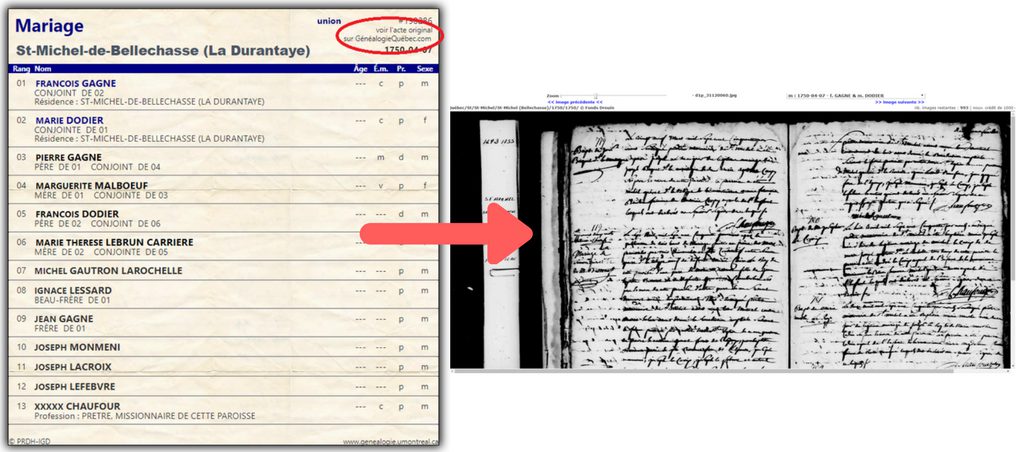
Marriage as seen on GenealogyQuebec.com


Search Tools for Exploring the Register of Marriages in Quebec

Given the incredible number of documents collected and indexed in the records through the years, it was important to develop sophisticated search engines to better navigate through these informations. These tools allow to search precisely and trace relationships among individuals.

The 1926-1997 marriages and deaths collection, available on Genealogy Quebec, is part of the range of tools for exploring the available documents. The vast majority of marriages and deaths that occurred during those years were documented with this tool, itself equipped with a search engine. Thus, anyone who is doing genealogical research and knows that the parental relations they want to discover or confirm took place at that time will probably find useful documents.

Other research tools are suitable for other periods. Therefore, it is possible to find marriage certificates having taken place in Quebec during the 17th, 18th and 19th centuries by using Genealogy Quebec’s search engine. By doing so, genealogical portraits and related research are relatively easy to implement and support with several documents. This is a richness that is not available for all, because for many centuries, Quebec was particularly disciplined in keeping these kinds of records.

How to Use Marriage Records Search Engines

One must know that certain practices can complicate searching in these databases, including the spelling of names that may have changed over time. During research, it is advisable to first search more generally, limiting oneself to a family name and a date, if they are available. Then, if necessary, it will be possible to add parameters to refine your search. This technique increases the chances of finding relevant documents.

If the results are inconclusive, the family name might have been written in other ways. The person conducting the research will then expand his or her search fields, for example using the character % as a result of the common root of the name (ex: Beau% to search for Beauregard, Beaulieu, Beaudoin, Beaudry, etc.). This form of research is broader and therefore slower, but it allows one to find documents that might otherwise go unnoticed.

Why Use a Register of Marriages for Genealogical Research?

Talk to any genealogy experts and they will tell you that registers are inexhaustible resources for tracing family ties to discover or confirm already known elements. The information found in these registers is usually very reliable. It has always been in the interest of religious and governmental authorities to collect very specific data about the province’s population. Today, genealogists continue to develop and improve these research tools, including those associated with the Quebec marriage records.